Nigeria is an agricultural paradox. Despite vast arable land, abundant water, and a youthful population, the nation spends billions importing food it can grow. Once a global powerhouse with groundnut pyramids, cocoa, palm oil, and cotton, Nigeria now struggles with insecurity, broken value chains, and policy instability. Yet, bright spots in rice, palm oil, and agritech startups show that the sleeping giant can still awaken—if bold decisions are made.
Nigeria is an agricultural paradox.
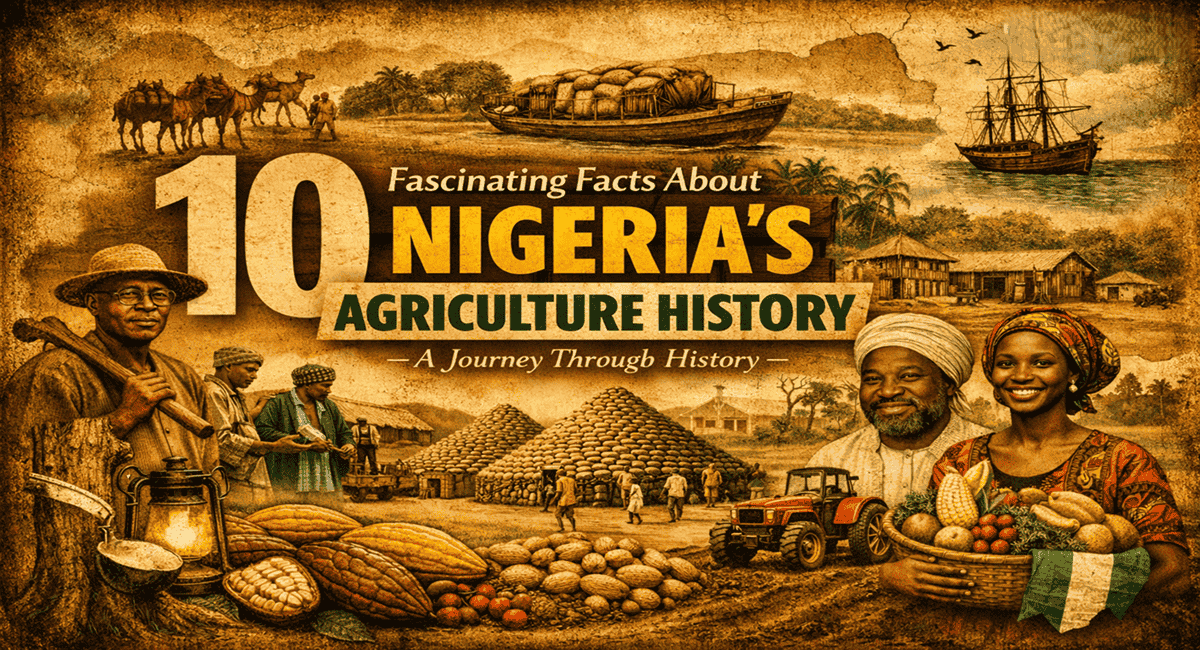
We have the land, the water, the population, the climate, and yet we remain one of the world’s largest importers of food we can grow ourselves. In 2024, Nigeria spent over $7 billion importing wheat, rice, sugar, fish, and milk; commodities that were the backbone of our economy in the 1960s. Groundnut pyramids once towered in Kano, cocoa funded the Western Region, palm oil made the East rich, and cotton clothed the North. Today, those symbols are museum pieces.
The Numbers Don’t Lie
- 70% of Nigerians engage in agriculture, mostly at subsistence level.
- Agriculture contributes about 25% to GDP but employs over 35% of the workforce.
- We have 84 million hectares of arable land; only 40% is cultivated.
- Nigeria is the world’s largest producer of cassava, yam, and cowpea, yet we export almost none of it in processed form.
- Over 60% of tomatoes produced in Nigeria rot before reaching the consumer.
So what exactly is wrong?
The Real Problems without sugarcoating
1. Policy Somersaults
Every new administration comes with a brand new agricultural policy.
Anchor Borrowers’ Programme (2015), zero allocation for agriculture in some states, sudden import bans, sudden import waivers, smuggling, and policy reversal. Farmers can’t plan.
2. Insecurity
Farmers in Zamfara, Katsina, Benue, Plateau, and southern Kaduna now pay “harvest tax” to bandits. Many have abandoned their farms entirely. The Nigerian army is fighting on multiple fronts; the farmer has no army.
3. Limited Mechanization
A 2023 study showed that Nigeria has less than 0.3 tractors per 1,000 hectares. Compare that to Brazil (18) or South Africa (7). Many Nigerian farmers still use cutlasses and hoes in 2024.
4. Broken Value Chains
We produce cassava but import starch. We produce tomatoes but import paste from China and Italy. We have millions of cattle but import powdered milk from New Zealand. Every missing link in the chain is a missed opportunity.
5. Youth Migration
Farming is seen as punishment. Rural-urban migration is bleeding the sector dry. The average Nigerian farmer is 55–60 years old. In 20 years, who will feed us?
Bright Spots; Because They Exist
Despite the gloom, some things are working:
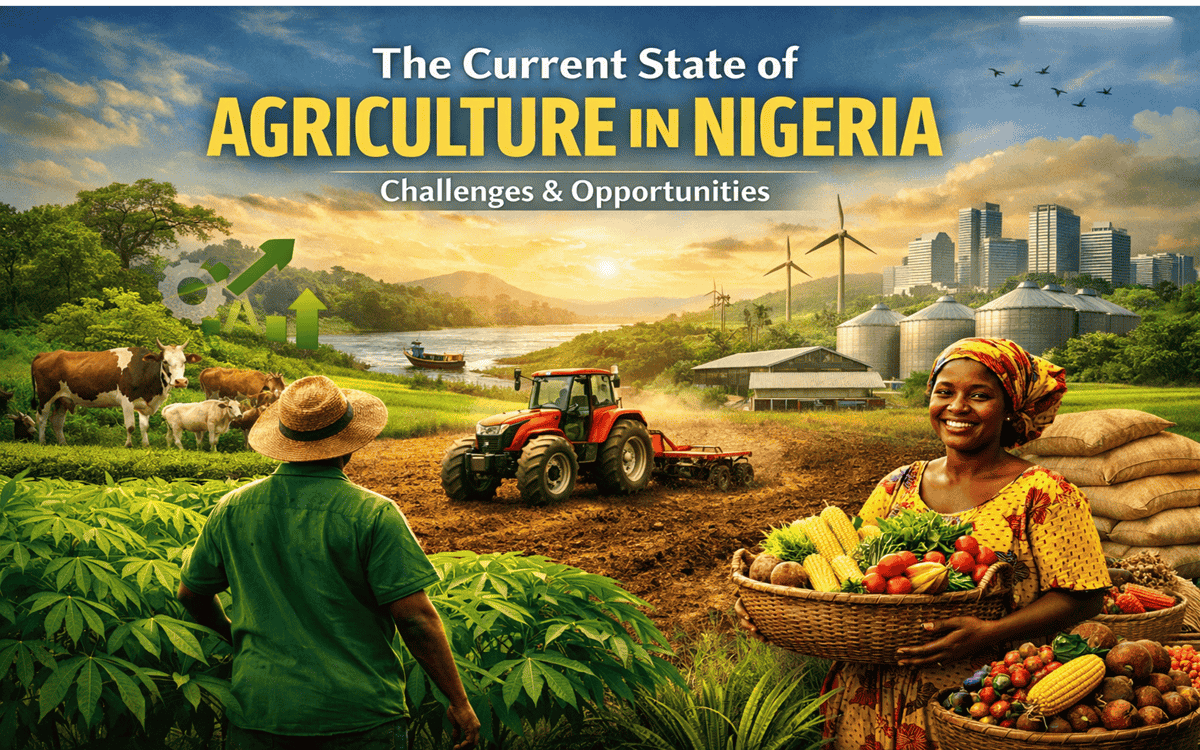
- Olam, Dangote, and Flour Mills are investing billions in rice milling and integrated farms.
- Coscharis, Okomu, Presco have turned oil palm around; Nigeria is now a net exporter of palm oil again.
- Lagos, Kebbi, and Jigawa rice revolutions showed that with irrigation and off-taker agreements, farmers can produce 7–8 tons/ha.
- Propcom+, GIZ, and TechnoServe are proving that smallholder farmers can double yields with good seeds, extension services, and simple mechanization.
- Start-ups like AgricPal, ThriveAgric, FarmCrowdy (now Requid), AFEX, and Hello Tractor are bringing finance, inputs, and equipment to farmers via mobile phones.
What Must Happen Now (No More Excuses)
1. Declare a National Agricultural Emergency
Treat food security like the existential threat it is.
2. Fix Rural Security
No farming without peace. Ranching bill, state police, community vigilantes—whatever works.
3. Massive Investment in Irrigation
Nigeria has water. Develop the 12 river basins properly. One good dry-season harvest can change a farmer’s life forever.
4. Make Mechanization attractive and Affordable
Subsidize tractors, planters, harvesters through service centers. Let young graduates run them as businesses (Hello Tractor model).
5. Ban Importation of Anything We Produce at Scale
Rice, fish, tomato paste, fruit juice, milk. Give local processors 5–10 years of protection. It worked for cement.
6. Turn Agriculture into Agribusiness in Schools
Let every secondary school have a commercial farm. Let universities run processing plants. Let NYSC members be deployed to mechanized farms, not only to classrooms.
7. Pay Farmers Like Oil Workers
A rice farmer in Kebbi who produces 500 bags should earn ₦25–30 million per season. When that happens, every graduate will want to farm.
Final Word
Nigerians have everything we need to feed ourselves and export to West Africa. What we lack is the courage to make hard decisions and stick to them for more than four years.
Until we treat agriculture as the new oil—complete with the same urgency, investment, and patriotism we gave to petroleum—those groundnut pyramids will remain black-and-white photographs.
The land is still there.
The rain still falls.
The youth are willing—if we make it worth their while.
It’s time to wake the sleeping giant.
Nigeria can feed Africa.
The only question is whether we finally will.
What are your thoughts on the stances of agriculture in Nigeria? Share in the comments! 🌱🚜